
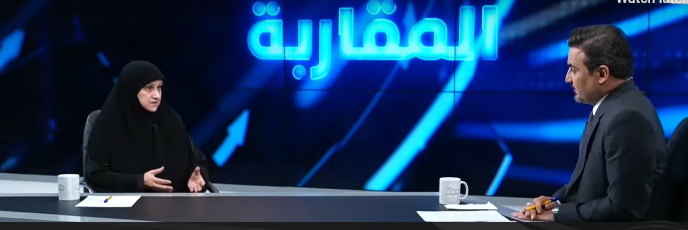

During an interview with the Minister of Communications, Dr. Hiyam Al-Yasiri, on Dijlah TV on August 26, 2025, the minister spoke about her ministry’s efforts in developing the telecommunications and internet sector in Iraq. She explained that the ministry is responsible for providing the infrastructure for fixed and home internet and has worked on significantly reducing the price per megabyte of internet, aiming in the future to make it almost free. She also emphasized the transition from Wi-Fi networks — specifically wireless — to fiber-optic cables, with the goal of offering much faster internet speeds, stating that fiber-optic internet is 30 times faster than that provided through towers. This also includes addressing the issue of capacity smuggling and manipulation.
She also revealed a plan to gradually phase out Wi-Fi (wireless) services, except in remote areas, and announced that the number of fiber-optic lines in Iraq has reached four million.
Regarding the “Vodafone Iraq” project, she clarified that it is a 100% Iraqi government project aimed at improving service quality and launching a national license, similar to what many other countries do. The “parent company, Vodafone,” will provide management and training services for a fee, while all revenues will return to Iraqi government entities — the National Retirement Authority, the Trade Bank of Iraq, and Al-Salam General Communications Company. The new company will be granted exclusive rights to 5G services for three years, and she confirmed that the first phone call is expected to be made in the coming weeks. She also noted that the project will comply with Vodafone’s global policies and standards, especially regarding user security and data protection.
The minister also touched on the postal sector, announcing the upcoming launch of a national postal code (ZIP code) system for the first time, and that Iraq’s ranking in the Universal Postal Union has risen from 157 to 32. She addressed the issue faced by Iraqis when trying to purchase products from international companies online, as they are often forced to rely on secondary delivery companies from neighboring countries due to the absence of a functional Iraqi postal service. The Minister of Communications promised to solve this by providing each Iraqi citizen with a unique postal code and address, enabling them to receive purchases directly from anywhere in the world.
Additionally, she announced the launch of the “Tashil” (Facilitation) project, which aims to deliver official documents and complete government transactions for citizens from their homes.
She denied accusations that she was hindering the establishment of data centers in Iraq, stating that she was actually the first to initiate this work through the ministry. She emphasized the importance of protecting data and ensuring it is handled domestically only.
The minister also mentioned her meeting with the Chinese ambassador, where she informed him about problematic content on TikTok, which she believes includes abusive material and is being used for money laundering through live streams. She said she reached out to the company and the Chinese embassy but received no response. She noted that tech companies often justify inaction by claiming Iraq lacks the policies and laws to address such issues. The minister declared her intention to block TikTok if Parliament provides the necessary signatures or resolutions.
She criticized the unregulated freedom of social media platforms in Iraq and cited the UAE as a model of balanced freedom and openness. She added that in other countries, people are even held accountable for what they write on WhatsApp.
Watch the full interview here in Arabic
