

Original Article on SecDev Foundation
When Jihan Mazahim Kazim opens her late father’s photo album, she is not looking for his most flattering picture. She searches instead for the face she remembers: the familiar smile, the curve of his eyebrows, and the lines that time had etched around his eyes. The photographs are imperfect, but that is what makes them truthful. They preserve the person she knew.

Jihan ponders a photo of her grandfather.
This personal memory became the starting point for Jihan’s recent article, When Images Become Memories That No Longer Resemble Their Owners. Her reflection asks an unsettling question: what will future generations find when they search through today’s digital albums, where faces are routinely filtered, reshaped and brought closer to a manufactured ideal?
She moves the discussion beyond beauty or self-confidence. Photographs are also records of family history. In countries such as Iraq, where conflict, displacement and migration have separated families from people, homes and places, photographs can become one of the few remaining connections to the past. If those images no longer resemble the people they are meant to preserve, Jihan asks, what happens to memory itself?
Jihan’s article is one of four distinct reflections produced by master’s students who were asked to use the Arabic novel Digital Shadows as a starting point for analyzing the digital realities surrounding young people in Iraq.
Four students, four perspectives
The initiative was part of The SecDev Foundation’s regional work on digital violence against women, led in partnership with the Iraqi Network for Social Media (INSM), with support from Canada’s International Development Research Centre (IDRC).
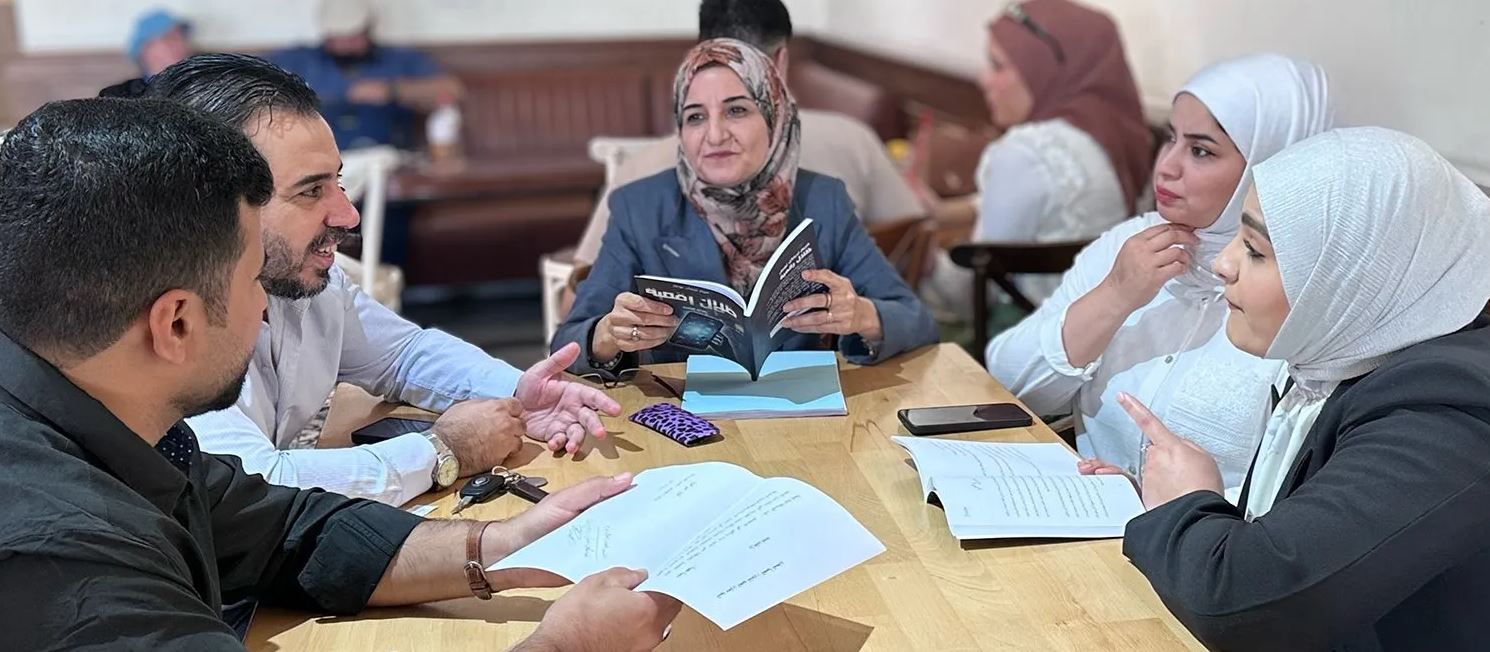
Working with Dr. Sahar Khalifa Salim from the Department of Media at Al-Iraqia University, INSM engaged four of her master’s students — two women and two men — to read Digital Shadows and develop analytical articles inspired by its characters and themes.
Digital Shadows is Dr. Meriem Narimane Noumeur’s novel for youth readers that explores themes of online identity, manipulation, resilience, and mental health. Taking that work as inspiration, the four students followed four different paths:

Karrar reflected on pressures to “perform life” for social media.
Jihan Mazahim Kazim examined what digitally altered photographs might mean for personal and collective memory. Karrar Al-Sarai reflected on pressures to perform life for social media, and how digital versions of ourselves can shape offline identity and experience. Mohaimen Wahhab ِAbbood examined how anger, frustration and trauma can redirect into digital violence. Riyam Mohammed Al-Saif explored how digital beauty standards can reshape the way people see themselves.
Together, their articles reveal how one story can open several conversations about the pressures shaping the lives of Iraqi youth. According to Karrar:
“Reading Digital Shadows gave me a deeper understanding of the issues it raises about young people’s lives in the digital space. I was struck by how we no longer simply live our moments, but sometimes become preoccupied with photographing, editing and presenting a version of them to an audience. The experience also introduced me to a new form of writing and editing, moving beyond merely presenting information towards analyzing it and expressing my own perspective.”
Moving beyond summary
Before planning their articles, the students took part in a training session led by the SecDev team on analytical and reflective writing. Rather than producing literary reviews, they were encouraged to use the novel as a window onto wider social questions — drawing one clear idea from the story, connecting it to everyday experience and developing an evidence-based argument that mattered to readers.

Mohaimen examined how trauma and frustration can fuel digital violence.
The workshop revolved around a shift in perspective — from asking, “what is the novel about?” to asking “what does the novel help us understand?”
For Mohaimen, this shaped both his subject and his understanding of digital harm:
“The writing process pushed me to look beyond the screen and ask what experiences or pressures might lie behind harmful behaviour. That led me to focus on Suha, because I wanted to challenge the stereotype of the cyberbully and explore the wounded person behind the mask of cruelty. I came to understand that digital violence can sometimes emerge from unspoken pain or family pressures that are displaced onto others. This does not excuse the harm, but it shows why meaningful analysis must go beyond judging what we see and try to understand the deeper wounds behind it.”
For Riyam, the answer lay in the growing distance between a person’s natural face and the filtered version they see every day. Her article begins with Jouri looking at her unfiltered image and feeling dissatisfied—not because her features have changed, but because social media platforms have placed a new visual standard in her mind.

Riyam unpacked the heavy toll of digital beauty standards.
The filter is no longer simply a playful addition to a photograph. It becomes a window through which the person interprets reality.
Riyam connects that shift to Iraq’s growing cosmetic-surgery culture. Without judgment, she asks what happens when beauty standards are increasingly shaped by social media, advertising, and narrowing ideals. If everyone pursues the same eyes, nose, skin and facial shape, are they enhancing their appearance — or erasing what makes each face distinct? In her words:
“Many girls use filters, and once they become attached to the result, they may begin trying to change their real features to resemble that image—sometimes through cosmetic procedures. Writing the article made me more aware of how these pressures can shape the way people see themselves, and strengthened my belief […] in the importance of examining digital issues that affect society from a critical and responsible perspective.”
Breaking into the Iraqi media
In July 2026, all four articles were published by Iraqi media outlets. For the students, publication marked the transition from a university exercise to public commentary, bringing their ideas to readers who may never have encountered Digital Shadows.

Iraqi News Agency
Shadows of Anger: How Does Frustration Turn into Digital Violence?


Dr. Sahar Khalifa Salim from the Department of Media at Al-Iraqia University.
Turning academic ideas into public writing required more than subject knowledge. The students had to find a human entry point, explain why an issue mattered and communicate without academic language. Dr. Sahar therefore served not only as a lecturer, but as an editor and bridge to the Iraqi media:
“I am keen to ensure that my media students learn how to examine the issues affecting society and translate them into media content that audiences can understand and engage with. Through working with the four students on Digital Shadows, I saw each of them move from reading the text to identifying a distinctive angle connected to the realities of young people in Iraq and then develop it into an analytical article grounded in research and reflection. It was important for me that they recognize that what they write at university can extend beyond the classroom, reach the media and contribute to wider public debate.”
The special reach of a novel
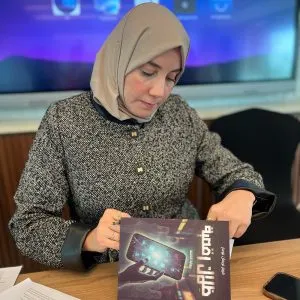
SecDev and IDRC released Meriem Noumeur’s Digital Shadows in December 2025.
Digital safety awareness often begins with instructions: use stronger passwords, protect personal information, avoid suspicious links, and report harmful content. But technical intervention alone does not speak to the human experiences behind digital risk.
It does not consider why a young person may depend on online approval, trust a manipulative relationship, or alter their digital face until their real one feels unacceptable. It does not ask why a group may join in humiliating or exploiting a peer.
Fiction provides a special route into these deeper issues.
Through fictional characters, readers can explore difficult experiences without immediately having to reveal their own. A reader can examine a character’s fear, insecurity, anger, or need for acceptance from a safe distance. That distance can make sensitive issues easier to discuss. At the same time, the familiarity of the characters may encourage readers to recognize parts of themselves, their friends or the society around them.
The four students then made that same journey—from recognition to analysis.
A filtered face became an investigation into commercialized beauty. A family photograph became a reflection on war, displacement and memory. A digital performance fueled questions about presence. A character’s anger opened a discussion about the roots of digital violence.
The novel did not provide the students with ready-made conclusions. It offered something better: a space in which to ask better questions.
Young people as knowledge producers
For INSM, working with university students was an investment in who gets to shape public conversations about online life and digital harm.
In the digital safety space, we often treat young people as consumers of awareness campaigns. We tell them what risks to avoid, which behaviours to change and how they should protect themselves. But this initiative was different. It invited them to interpret, analyse, question and publish. Their experiences and observations became sources of knowledge rather than merely targets of instruction.
The approach reflects insights from INSM and SecDev’s work on digital violence against women: online harm cannot be approached through account security and individual precautions alone. It is shaped by relationships, reputation, gender expectations, family pressures and the need for acceptance. Much the same is true of the wider digital pressures that youth face.
Young writers and media professionals can help translate these connections into language that reaches wider audiences. According to Asia Anwer, INSM Project Coordinator:
“INSM wanted to give young media students a role that went beyond receiving awareness messages. By reading Digital Shadows and developing their own analytical articles, they were able to connect the novel’s themes with the realities of young people in Iraq and contribute their own perspectives to the public conversation. We hope these articles will encourage wider discussion of digital identity, social pressure, and digital violence, while also showing that young people can be active producers of knowledge and media content.”
The story continues
Four articles cannot resolve the pressures the next generation faces online, and a novel cannot eradicate online harm. But this initiative shows how awareness can become something more than instruction: a process where young people interpret their own realities, test ideas, and contribute to public understanding.
It gave students a story rich enough to question, analytical tools to examine it, mentors who treated their ideas seriously, and media platforms willing to publish them. Together, those elements helped turn reading into locally grounded public knowledge.

Jihan confronted what we’re losing forever in the age of filtered images.
Their articles now invite readers to make the same movement—from recognition to reflection. Someone may begin with a filtered face, an angry character or a family photograph, and come away seeing the pressures of online life differently.
Jihan’s final image gives that invitation a poignantly human form. One day, children may open their parents’ digital albums searching for the faces they remember, only to find polished versions that resemble their parents but are not quite the people they knew.
The spark for these explorations was a novel. It travelled through a university classroom, four young Iraqi writers, and into the Iraqi media. What happens next belongs to their readers.
