
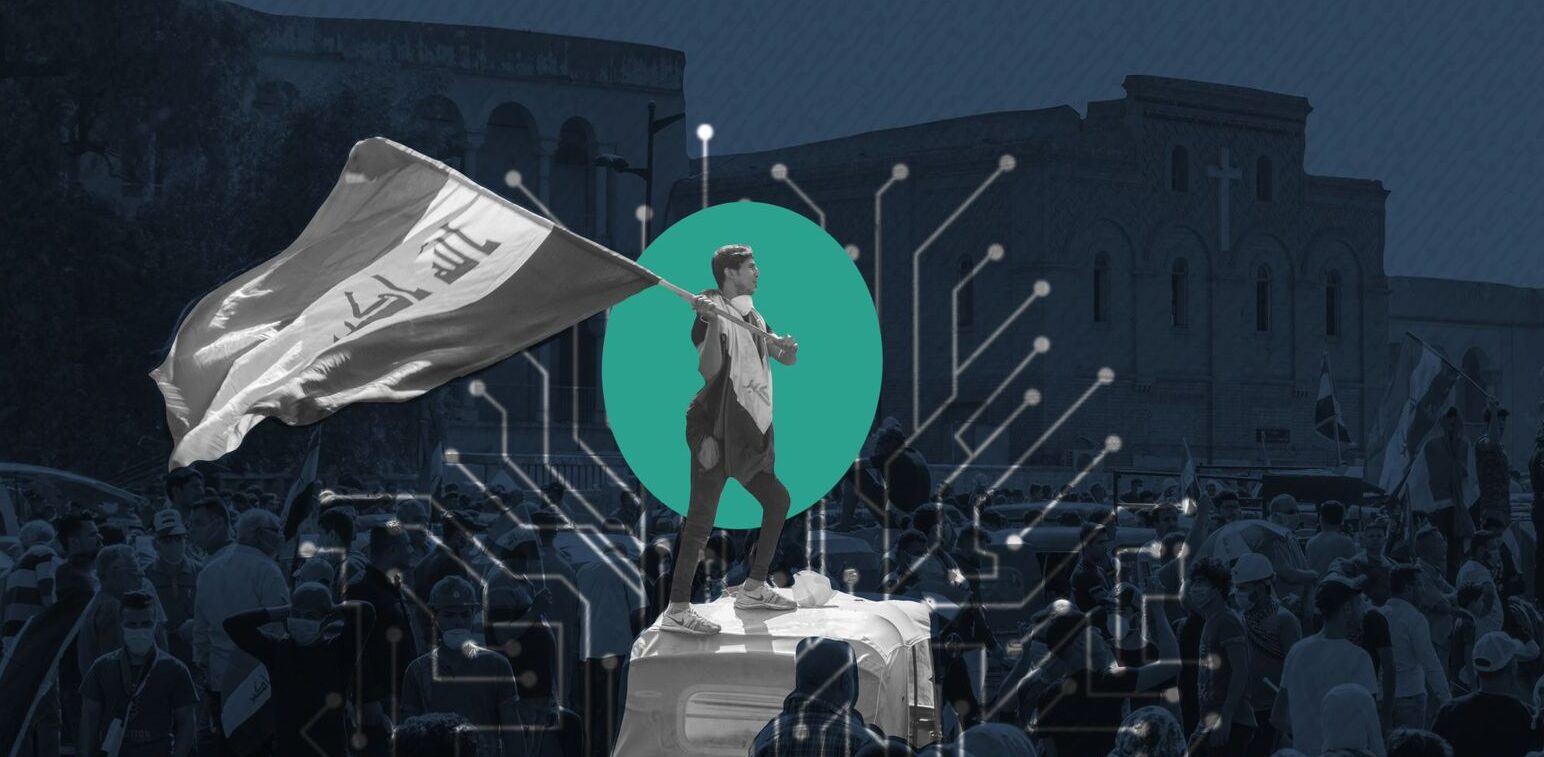

Digital Rights Violations of Iraqis During the October (Tishreen) Protests: Internet Shutdowns, Platform Blocking, and Phone Searches
After the outbreak of the October 2019 protests in Iraq, authorities imposed a broad block on social media platforms, followed by an almost complete internet shutdown that covered most provinces (the Kurdistan Region was largely excluded).
Later, during November 2019, the shutdown was reimposed intermittently. The government described this as a “security measure” in response to ongoing unrest, but it effectively violated fundamental rights — including freedom of expression, peaceful assembly, and access to information — while restricting journalistic coverage, documentation, and facilitating violations against protesters.
This blackout served as a tool for the authorities to obstruct communication among protesters, disrupt the organization of demonstrations, prevent documentation of repression and abuses, and block the voices of protesters from reaching both local and international audiences — depriving them of crucial information that could ensure their safety and protection.
In a statement, then–Prime Minister Adil Abdul-Mahdi — who resigned after the protests — justified the internet shutdown by saying:
“The digital world (the Internet) is a modern reality and a right for all, and a tool for expressing suppressed voices and free opinions… Yet authorities, in defense of the rights of all, are sometimes compelled to restrict it when it is used to promote violence, hatred, conspiracy against the homeland, and disruption of public life, which is also a right for all citizens.”
Documented Evidence
International and local organizations — including UNAMI / UN Human Rights Office, Access Now, NetBlocks, CPJ, and INSM Foundation for Digital Rights — documented the shutdowns with technical measurements and field reports, linking them to broader violations such as killings, injuries, and arbitrary arrests.
Protesters also reported being stopped at security checkpoints, where their phones were searched for photos or protest-related content without a judicial order — a violation of privacy confirmed by UN reports. Such practices breach Article 40 of the Iraqi Constitution, which guarantees the privacy of communications and prohibits surveillance or disclosure except under legal and judicial authorization.
Timeline of Internet Restrictions (October–November 2019)
-
October 2: Facebook, Twitter, WhatsApp, Instagram, and other platforms blocked as protests expanded in Baghdad and southern Iraq, coinciding with state violence against demonstrators.
-
Evening of October 2–3: The block escalated to an almost total internet shutdown — 75% of the country (including Baghdad) went offline for several days.
-
October 11: Gradual return of service, though access remained slow and intermittent.
-
November 11: Temporary, periodic shutdowns lasting for hours or days.
-
November 21: Partial lifting of platform blocks after roughly 50 days of continuous restrictions.
These restrictions coincided with documented UN reports of escalating violence against protesters between October 1–9 and October 25–November 4.
Under the Pretext of Security: Iraqis’ Digital Rights Were Violated
Freedom of Expression, Protest, and Access to Information:
The shutdowns prevented documentation of abuses and limited journalists’ ability to report. Several media offices were raided or closed, disconnecting protesters from safe coordination and security information during crackdowns.
The Internet is a key tool for peaceful assembly and organizing — its restriction undermines safety measures and suppresses free expression, particularly across social media platforms.
Protesters tried to document abuses on their phones and later upload evidence when the Internet was restored, to preserve records and prevent erasure of violations.
A 2022 UN report described the nationwide blackout as “disproportionate,” affecting a wide range of interlinked rights.
Digital Security and Data Risks
As platforms were blocked, Iraqis increasingly turned to free, unverified VPN apps, many of which were unsafe or malicious. This mass reliance on insecure tools exposed national and personal data to cyber risks, creating a significant digital security threat to Iraqi citizens.
Economic and Social Impact
As with internet shutdowns during exam periods (as noted in previous reports), these cuts caused economic and service disruptions — halting digital businesses and impairing vital services such as healthcare, emergency response, education, e-payments, and government systems.
According to a NetBlocks report, Iraq’s economy suffered an estimated $951 million in losses due to the shutdown, affecting both protesters and the growing digital economy.
Phone and Device Searches at Checkpoints
Reports documented the stopping of young people at Baghdad checkpoints, where their phones were searched without warrants for protest-related content. Some were detained immediately, and documentation materials were deleted.
Protesters told INSM that cars leaving protest areas were searched for any protest-related media. UN documents also referenced these practices as constitutional violations.
These tactics aimed to intimidate protesters and discourage them from documenting or keeping evidence. Authorities had used similar methods in Basra in 2018 to suppress demonstrations.
Electronic Surveillance and Account Hacking
Beyond physical searches, government-linked and militia-affiliated groups launched cyberattacks and digital espionage targeting activists.
According to Al Jazeera English, “electronic armies” affiliated with armed political parties hacked activists’ phones and social media accounts, spying on communications, uncovering protest plans, and issuing direct threats.
Some protesters were tricked into downloading fake apps that stole their messages, allowing security forces to locate gatherings in advance and arrest organizers.
This cyber warfare revealed the government’s growing digital surveillance capabilities, reportedly supported by foreign technical expertise. The online space thus became another front for repression through hacking and data theft aimed at dismantling the protest movement.
Legal and Constitutional Framework
-
Iraqi Constitution (2005): Guarantees freedom of expression, press, and peaceful assembly (Article 38). Any restriction must be lawful, necessary, and proportionate.
-
International Covenant on Civil and Political Rights: Protects freedom of expression (Art. 19) and peaceful assembly (Art. 21), to which Iraq is a signatory.
-
UN Human Rights Council Resolution 2016 (A/HRC/32/L.20): Condemns intentional internet disruptions and calls on states to refrain from such practices.
Lawyer Mohammed Jumaa filed a lawsuit in Baghdad’s Karkh Court demanding the cancellation of the internet shutdown decision, arguing it violated the constitution and citizens’ rights, and sought compensation for damages caused by the infringement on freedom.
INSM, SMEX, and Access Now: Digital Rights Advocacy
INSM, in collaboration with SMEX, launched a campaign under the hashtag #لا_لقطع_الاتصالات (#NoToInternetShutdowns), which gathered 20,000 signatures in solidarity.
These organizations demanded the restoration of internet access across Iraq, including Kurdistan, citing human rights, economic, and social harms, and the direct threat to protesters’ safety.
Access Now, through its #KeepItOn coalition, also pressured Iraqi authorities to end the shutdown.
In its October 4, 2019 report, Access Now described the situation as a “near-total internet blackout amid violent protests,” noting that 75% of Iraq was digitally isolated during the first days. Alongside 200 other rights organizations — including INSM— it issued an open letter on November 8, 2019, urging Iraq to keep the internet open and safe.
Conclusion
The blocking of social media, total internet shutdowns, and arbitrary digital searches during October 2019 failed to meet the standards of legality, necessity, and proportionality under international law. They violated constitutional and legal guarantees and were used as tools of repression against protesters.
These combined practices — blocking, shutdowns, phone inspections, and account hacking — demonstrate that digital violations during the Tishreen protests were not random but part of a systematic strategy to isolate the movement and silence dissent through technological control.
The aftermath left activists in a state of self-censorship and fear, marking a dangerous precedent for privacy and freedom in Iraq’s digital space.
The October events stand as a powerful lesson on the intersection of modern technology and human rights, and the crucial importance of safeguarding internet freedom as an inseparable part of freedom of expression and assembly in the digital age.
